This post was generated by ChatGPT, the reflection afterwards is my own.
In the first chapter of Cultures of Our Past, Lawrence Lessig explores how In the first chapter of Cultures of Our Past, Lawrence Lessig explores how culture has historically thrived on remixing and reinterpreting existing works. He contrasts this “read/write” culture—where everyone contributes to creativity—with a more restrictive “read-only” culture, where consumption is passive and controlled by copyright laws. Lessig argues that modern copyright regulations often stifle creativity, especially in the digital age where remixing content has become easier than ever.
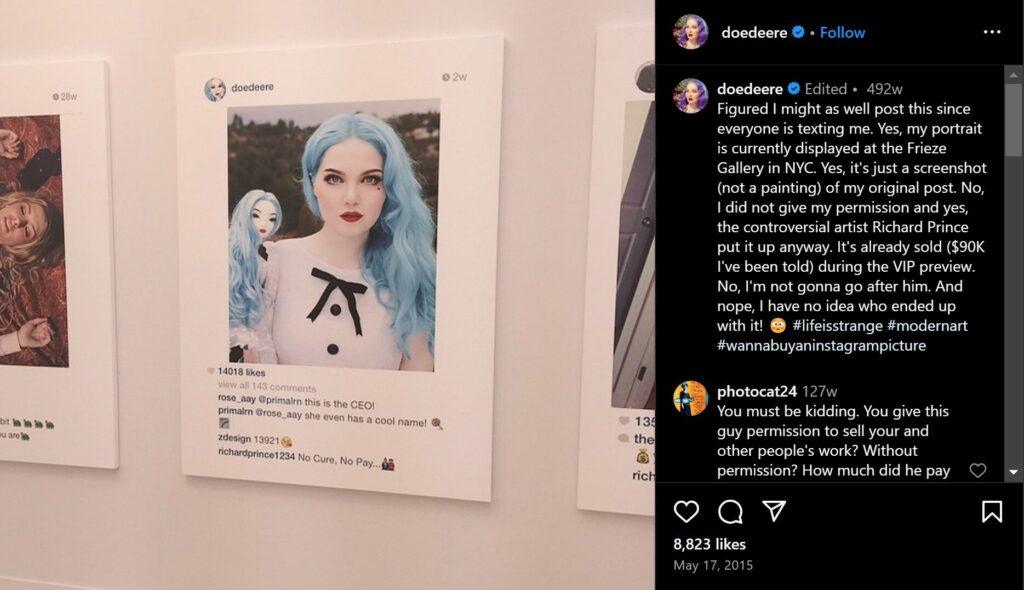
What is New Portraits?
Richard Prince’s New Portraits is an art exhibit that debuted in 2014, featuring large-scale prints of Instagram photos that Prince had appropriated from other users’ accounts. Prince added only a short comment to the posts before reprinting them onto canvases, selling the works for substantial amounts of money. The exhibit sparked controversy, with many questioning the ethics of using someone else’s content without permission or compensation.
Prince’s work raises critical questions about authorship and ownership in the digital age: when content is shared publicly, does it become fair game for reinterpretation? Or is this a form of exploitation?
Prince’s work highlights the divide between Lessig’s vision of remix culture and the reality of commercialized appropriation. While Lessig advocates for a more open and collaborative approach to creativity, Prince’s exhibit suggests that this freedom can be exploited when original creators receive no recognition or compensation for their work.
Ultimately, Lessig’s ideas encourage a cultural landscape where remixing thrives, but Prince’s New Portraits complicate the issue by revealing the ethical challenges in defining where creativity ends and exploitation begins. In today’s digital world, balancing the rights of creators with the freedom to remix is more important than ever.
Reflection: I think ChatGPT did an alright job at talking about what I hoped it would talk about when I asked it to include commentary about Richard Prince’s New Portraits Exhibit. Reading what it wrote is interesting and it makes good general points about the art exhibition and how it relates to copyright issues. If I were to write it myself I would probably write more definitively what my actual opinion is on the topic rather than just say that “Prince’s work raises critical questions”, list the questions, and then leave the questions unanswered. Part of the fun of writing or reading blog posts is the fact that the people writing and reading have interesting personal anecdotes and actual opinions that they have actual feelings about, whereas ChatGPT simply has whatever its been fed.


Leave a Reply