Invisible by Design: The Damsel in Distress Trope, Gender Data Gaps, and the Erasure of Women in Media

The title of this post was generated by AI, the content was created by me

The damsel in distress video that we watched for class today reminded me a lot of a book I’ve been reading called Invisible Women by Caroline Criado Perez, which discusses the ideas that in our society men are the default, this causes a gender data gap, and that our collective unthinking and failure to intentionally consider women and their perspectives contributes to this problem.

One of the examples that Perez gives highlights a problem within children’s tv characters;

“A 2007 international study of 25,439 children’s TV characters found that only 13% of non-human characters are female (the figure for female human characters was slightly better, although still low at 32%). An analysis of G-rated (suitable for children) films released between 1990 and 2005 found that only 28% of speaking roles went to female characters – and perhaps even more tellingly in the context of humans being male by default, women made up only 17% of crowd scenes.”

These statistics feel very related to the ideas that the Damsel in Distress video brought up about women being not active participants in games, but a prize or cheap plot device to give the game an objective. When the women are simply a prize, or “the ball” with which men are in a competition over, there are far fewer of them needed in the game- what game needs more than one ball?

As a child I recognized that most video games were designed for boys. My brother played a wide range of games and I enjoyed both playing and watching. The games that I played were mostly games like Mario Kart or Kirby AirRide that are multiplayer and have several options for characters or color differentiation, but many of the single player games that he liked, like Paper Mario or Zelda, didn’t really appeal to me. (I find it interesting that these were the two game series discussed within the Damsel in Distress trope.) I typically liked playing as girl characters because I am one, and there simply weren’t nearly as many female options as male ones. To this day when I go home and play Mario Kart Double Dash with my family, I choose to play as Toadette and Birdo. (I didn’t like playing as the princesses, the only two other playable girl characters out of 20 total- when they lose they loudly burst into tears with the exclamation, “I can’t believe I lost!”)
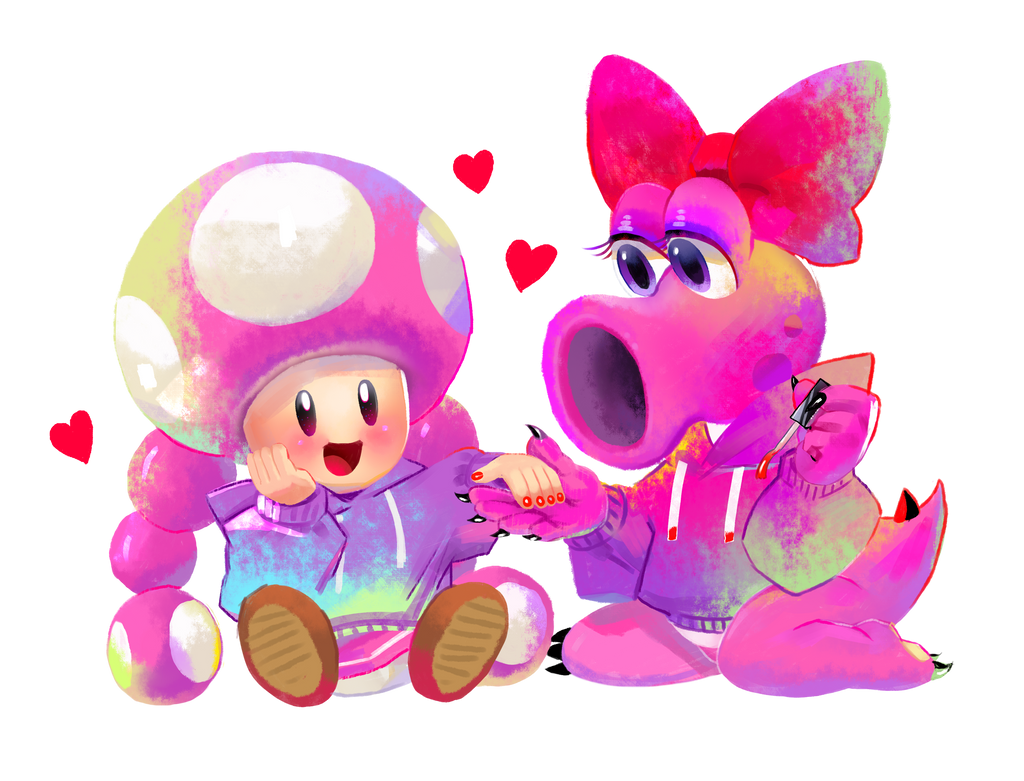
Illustration credit: https://www.deviantart.com/lokmaar/gallery

When it comes to single player games, the main games I played were Harvest Moon and Pokémon games which, by the time I got to play them, gave options to play as either a boy or girl. (Earlier forms of both were also male-centric.) I appreciate that these series saw an opportunity to include young girls and took it because I loved these games. I can only hope that the game industry as well as the movie industry and others recognize that women and girls need representation and role models that they can look up to or even just relate to just as much as men and boys do.

4 responses to “Invisible by Design: The Damsel in Distress Trope, Gender Data Gaps, and the Erasure of Women in Media”

  1. Emily Hartvigsen Avatar
    Emily Hartvigsen

    Aubrey, I liked your follow-up question addressing women being the “ball” or prize in culture and video games. “What game needs more than one ball?” This was an interesting way to accent the principle Sarkeesian taught. It’s interesting that you naturally gravitated to games with female characters. Thanks for a great post!

  2. Rick Rowley Avatar
    Rick Rowley

    Great post! I loved how you were speaking from your personal experiences, as I think a big part of shifting the male-centric dynamic of media relies heavily on hearing more of the lifetime perspectives of women, so that there can be less guesswork from people who haven’t actually lived those experiences. And I also loved the line from the video that “in the game of patriarchy, women aren’t the opposing team, they’re the ball.” Snappy and thought provoking for sure. Though one very minor criticism of your post on that point would be that there are a significant number of games that use more than one ball: dodgeball, and pool come quickly to mind. I think you were getting at a really good point, but I found this specific generalization off the mark in a way that weakened your argument a little, and I would’ve liked to see it be a little more airtight than that, so that people would have a harder time denying it!

    Some questions did also come to mind, regarding which I’d be interested to hear more! You mentioned preferring to play as a female character, which is totally understandable, but would you say that that factor was important enough to you to be the single deciding factor for whether or not you were interested in a game? Or might there have been other factors at play that lowered your interest, and the gender bias of the main characters was more just at the visual front of the line? Additionally, you talked about not wanting to pick one of the princesses in Mario Kart, and implied that it was because of their crying and whining after losing. What about that made you dislike those options, despite them otherwise ticking your female preference box, and what do you suppose the other options had that the princesses didn’t which made you like them? None of these questions are criticisms, I am just genuinely curious to understand your thoughts a little better. Again, nice post!

  3. Brian Croxall Avatar

    I really appreciate your insight, Aubrey, that games don’t need more than one “ball.” There are only a few sports with multiple “balls”: something like bocce, curling, darts, or shuffleboard seem to count in my mind. Of course, as soon as you’ve thrown a curling stone, it stops acting like a ball and instead becomes a piece on the board. You can’t throw two stones at once. Pinball allows you to have multiple balls in play at one time, but it’s also a solo game rather than a sport you play against someone else. (I don’t think that scores are quite the same thing as head-to-head, simultaneous competition.) This really helps articulate why the framework of video games tends to absent the characters of women.

  4. Michayla Johnston Avatar

    The art you included is so adorable! One of the main points you made also stood out to me, which was the analogy of women being the ball that is tossed back and forth between men. I also prefer to play as a girl in video games most of the time, like you said, because I am one. I think this makes sense logically haha.

Leave a Reply

Your email address will not be published. Required fields are marked *